Smart Traveller

Quick Start Guide

SmartTraveller.gov.au is a comprehensive and user-friendly website provided by the Australian Dept of Foreign Affairs and Trade designed to assist travelers with essential information and advice before embarking on their journeys.

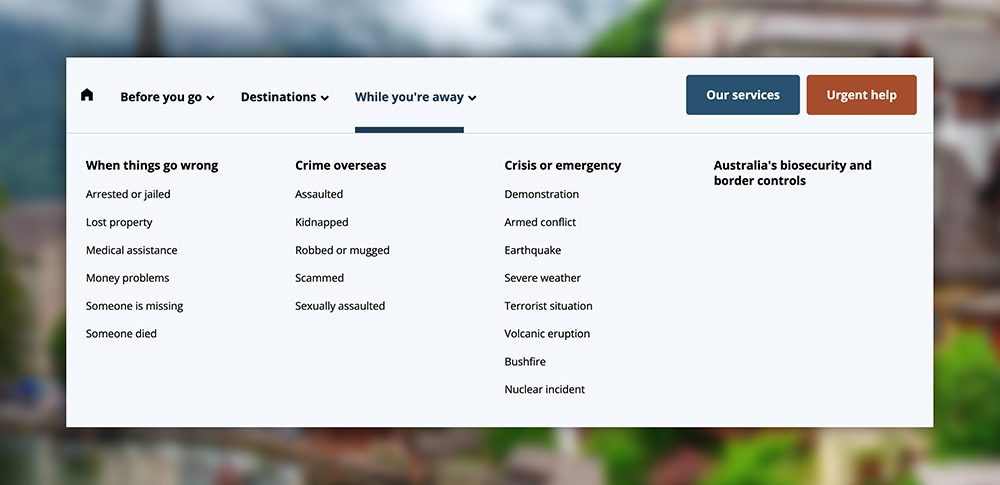
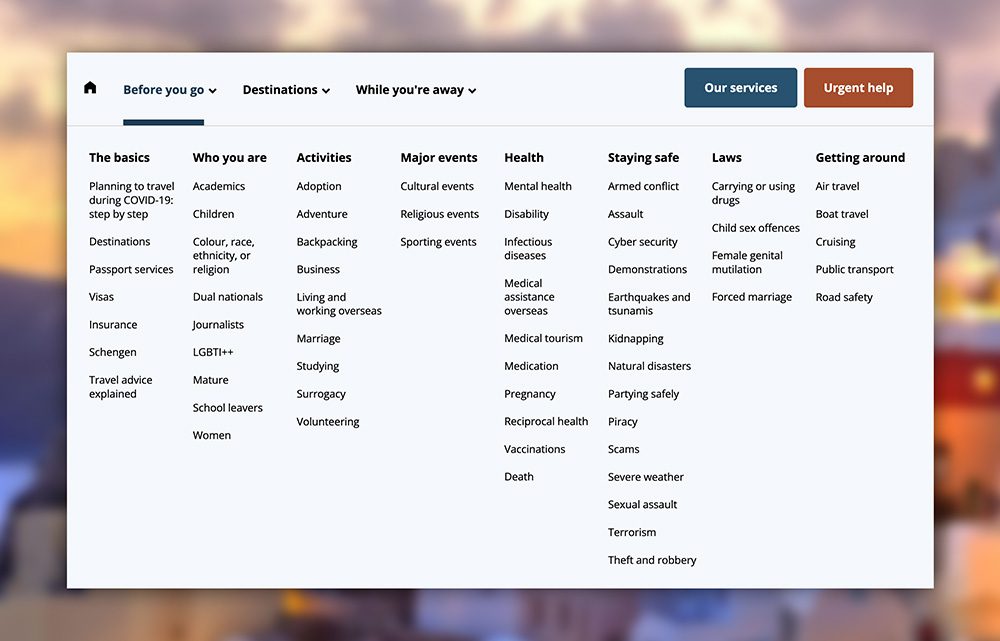
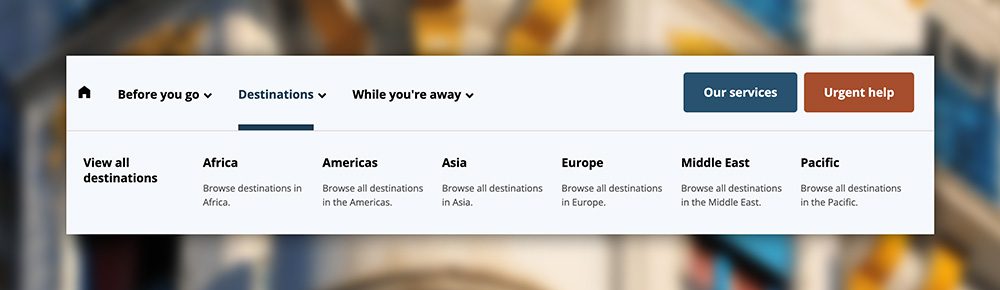
To make the most of this valuable resource, users can follow these steps: Firstly, visit the website and explore the homepage, which provides a brief overview of current travel alerts and important updates. To delve into specific topics, utilise the navigation menu located at the top of the page. By clicking on the “Destinations” option, travelers can access a list of countries, each with detailed travel advice, safety tips, and cultural insights.

For information on necessary travel documents and visa requirements, simply click on the “Passports and Visas” section. Additionally, the “Health” section offers essential health and vaccination recommendations for various destinations. To stay updated with travel warnings and emergencies, visitors can access the “Latest News” category. SmartTraveller.gov.au’s navigation menu proves to be an invaluable tool for travelers seeking specific and relevant information to ensure a safe and enjoyable trip.
Latest Updates

  • No travel advice
    by Smartraveller on May 13, 2026
  • Philippines
    by Smartraveller on May 12, 2026

    Terrorist attacks could occur anywhere in the Philippines. Possible targets include airports, public transport, hotels, shopping malls, restaurants, major events, places of worship and tourist areas. The risk of terrorism linked to the situation in the Middle East may escalate worldwide. There's growing concern about increased risk of attacks on Israeli and US interests globally and on Jewish communities, including in the Philippines. We continue to advise reconsider your need to travel to eastern Mindanao (excluding Camiguin, Dinagat and Siargao Islands) and do not travel to other areas of Mindanao due to the very high threat of terrorism (see 'Safety'). Avoid all protests, demonstrations or rallies. Check local media for the latest information. Public protests and large gatherings occur and may turn violent. It's against the law for foreigners to join public demonstrations. You may be arrested and deported if you participate. To reduce your risk of being scammed, robbed or harmed, only use official rideshare providers accredited by the Philippines Government or hire cars booked through hotels, including for travel to and from airports (see 'Safety'). Air pollution can reach unhealthy levels in the Philippines, particularly in Manila, and may cause breathing problems (see ‘Health’). We advise: Exercise a high degree of caution in the Philippines overall due to the threat of terrorism and violent crime. Higher levels apply in some areas.

  • Nigeria
    by Smartraveller on May 12, 2026

    We've reviewed our travel advice for Nigeria and continue to advise reconsider your need to travel due to the threat of terrorism, kidnapping, violent crime and the risk of civil unrest. Higher levels apply in some areas. We now advise do not travel to Kwara State, in addition to a number of other states in Nigeria. There's a high risk of terrorist attacks across Nigeria. Terrorist attacks may be more likely around religious holidays and other significant dates. Always be alert to threats, especially in public places. Avoid public demonstrations, rallies and gatherings. These can occur at short notice and may turn violent (see 'Safety'). We advise: Reconsider your need to travel to Nigeria overall due to the volatile security situation and threat of terrorism, kidnapping, violent crime and the risk of civil unrest. Higher levels apply in some areas.

  • Bangladesh
    by Smartraveller on May 12, 2026

    We've reviewed our advice and have lowered the overall travel advice level. We now advise exercise a high degree of caution overall. Large gatherings, including protests and demonstrations can be unpredictable and may turn violent with little or no warning. Avoid protests, demonstrations and rallies. Be aware of your surroundings, check local media and follow the advice of local authorities. We continue to advise you to reconsider your need to travel to the Chittagong Hill Tracts region due to the threat of kidnapping, politically motivated violence, and the risk of being caught up in clashes between rival groups engaged in conflict (See 'Safety'). We advise: Exercise a high degree of caution in Bangladesh overall due to the threat of terrorism and civil unrest.

  • South Africa
    by Smartraveller on May 12, 2026

    Strong winds and heavy rain across the Western Cape area are causing travel disruptions. Flights to and from Cape Town may be subject to delays, cancellations, or diversion to alternative airports. Monitor your flight status and remain in contact with your airline for the latest updates. Stay away from flooded areas and follow advice of local authorities (see 'Safety'). We continue to advise exercise a high degree of caution in South Africa. Protests and large gatherings can occur anywhere. Avoid areas affected by protests or large public gatherings. Monitor media for updates and follow advice from local authorities (see ‘Safety’). We advise: Exercise a high degree of caution in South Africa due to the threat of violent crime.

  • United Arab Emirates
    by Smartraveller on May 11, 2026

    The situation in the Middle East remains volatile. There remains a risk of attacks and escalation. If you're in the UAE and want to leave, can secure a flight and it’s safe to travel to the airport, we continue to advise you to leave while commercial flights are available. UAE airspace may open or close at short notice, impacting flights at Abu Dhabi and Dubai international airports. Prioritise your safety, monitor developments closely and follow local authorities’ advice. Stay aware of your environment and avoid government, military or energy infrastructure, including oil production facilities. Avoid Israeli and US diplomatic missions and other locations associated with Israeli, Jewish and US interests. Follow local warning systems and, if warned of an imminent attack, move to an enclosed hardened shelter, ideally underground or close to ground level if available. If these are not available, seek an inner room without windows. Civilian infrastructure including hotels, roads, bridges, universities, energy infrastructure, including oil production facilities, water infrastructure and airports may continue to be targeted. There are widespread movement restrictions and other travel disruptions in the region. The UAE airspace may open or close at short notice, impacting flights at Dubai and Abu Dhabi airports. We raised our level of advice for the UAE to do not travel on 28 February due to the volatile security situation in the region and military strikes. ‘Do not travel’ advice applies to transit and layovers in the UAE. Even if you don’t plan to leave the airport. If you travel to or transit through the UAE, you may be unable to leave. Your safety will be at risk. Your travel insurance may become invalid. Due to heightened security concerns, the Australian Embassy in Abu Dhabi and the Australian Consulate-General in Dubai are providing passport and notarial services by appointment. You can book an appointment by visiting uae.embassy.gov.au. If you need emergency consular assistance, contact the Australian Government's Consular Emergency Centre on +61 2 6261 3305 (if you're overseas) and 1300 555 135 (in Australia). Terrorism is a threat, including in the UAE. Terrorist attacks could happen at any time or anywhere. Avoid possible targets including venues that draw in foreigners, tourists or crowds where possible. Maintain a high level of security awareness. If there's a security incident, follow the advice of local authorities (see 'Safety'). US Embassies in the Middle East are issuing local security alerts. We encourage you to monitor US security alerts in your location. We advise: Do not travel to the UAE due to the volatile security situation in the region.

  • Croatia
    by Smartraveller on May 11, 2026

    Depending on why you're travelling and how long you plan to stay, you may require a visa for travel to the Schengen area. Check the European Entry and Exit (EES) and visa rules before you travel. If you're a dual national of a European country, check whether the EES applies to you and what passport you should enter on. There may be delays at border crossings (see ‘Travel’). We advise: Exercise normal safety precautions in Croatia.

  • Colombia
    by Smartraveller on May 11, 2026

    Colombia will hold elections on 31 May and 21 June. Demonstrations or protests may increase in the lead up to, and during this period. Protests can turn violent and may disrupt transport and travel. Avoid protests and large public gatherings. If a protest occurs, leave the area as soon as it is safe to do so. There's been increased terrorist activity in the departments of Cauca and Valle del Cauca, including in the city of Cali and the municipalities of Jamundí and Palmira. The situation continues to be unstable. If there's an attack, leave the area as soon as it's safe. Avoid the area in case of further attacks. We continue to advise do not travel to most of Cauca and reconsider your need to travel to most of Valle del Cauca. We also advise do not travel or reconsider your need to travel to several other areas of Colombia due to high risks of terrorism, crime and civil unrest. We advise exercise a high degree of caution for Colombia overall. You should read our full advice carefully for more detail on these areas (see 'Safety'). We advise: Exercise a high degree of caution in Colombia overall due to the threat of violent crime and terrorism. Higher levels apply in some areas.