
Quick Start Guide
SmartTraveller.gov.au is a comprehensive and user-friendly website provided by the Australian Dept of Foreign Affairs and Trade designed to assist travelers with essential information and advice before embarking on their journeys.
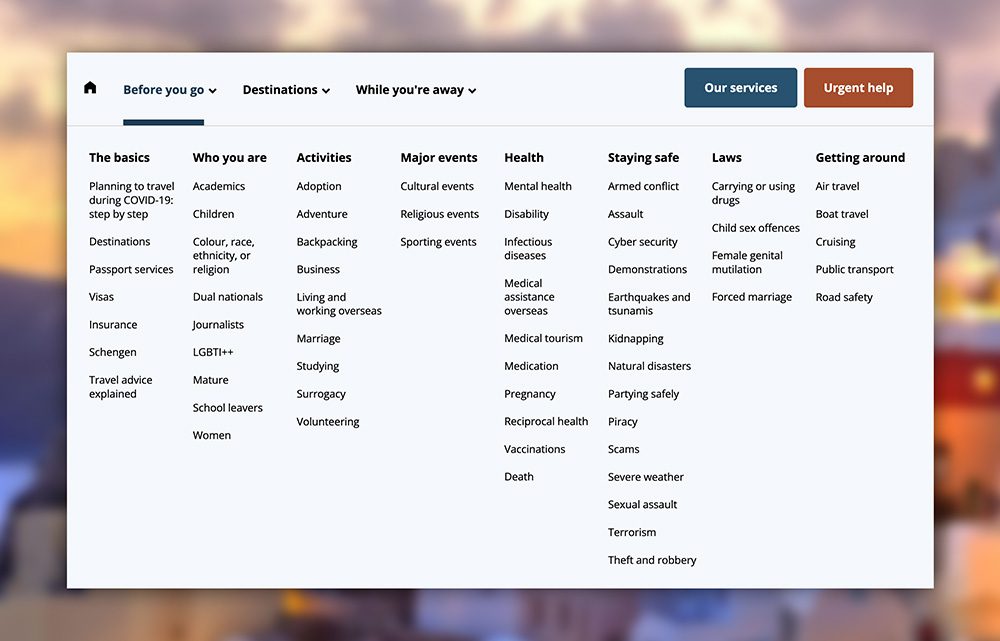
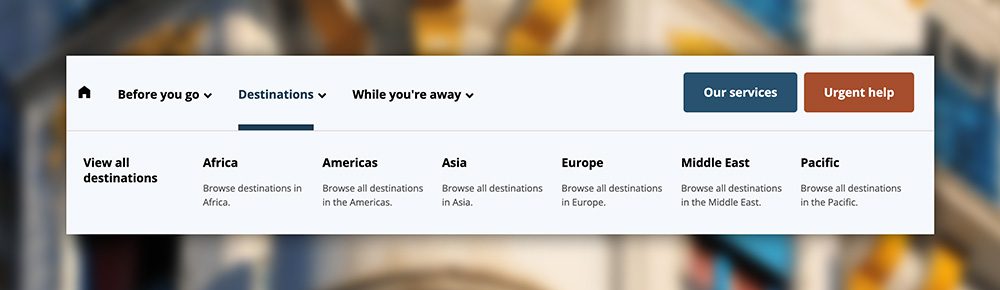
To make the most of this valuable resource, users can follow these steps: Firstly, visit the website and explore the homepage, which provides a brief overview of current travel alerts and important updates. To delve into specific topics, utilise the navigation menu located at the top of the page. By clicking on the “Destinations” option, travelers can access a list of countries, each with detailed travel advice, safety tips, and cultural insights.
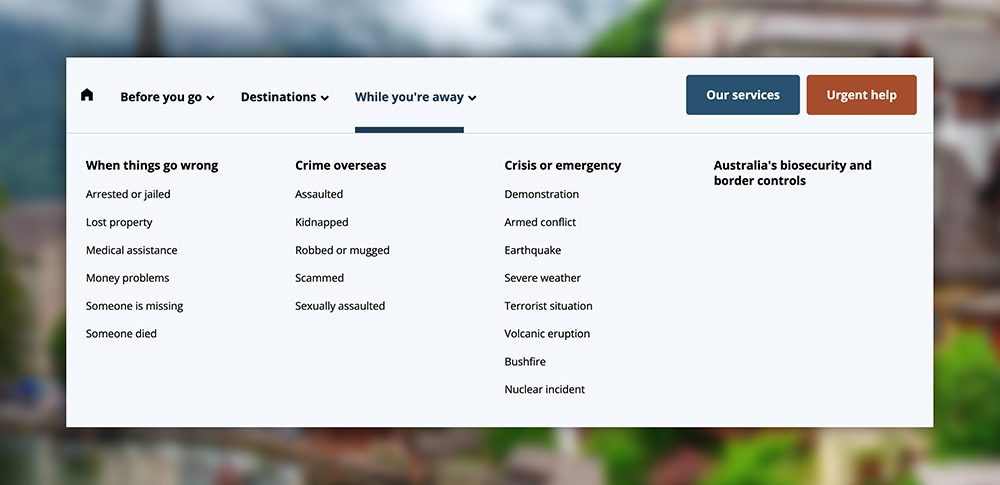
For information on necessary travel documents and visa requirements, simply click on the “Passports and Visas” section. Additionally, the “Health” section offers essential health and vaccination recommendations for various destinations. To stay updated with travel warnings and emergencies, visitors can access the “Latest News” category. SmartTraveller.gov.au’s navigation menu proves to be an invaluable tool for travelers seeking specific and relevant information to ensure a safe and enjoyable trip.
Latest Updates
- No travel advice
 by Smartraveller on April 8, 2026
 - Myanmarby Smartraveller on April 7, 2026
We continue to advise do not travel to Myanmar. The situation in Myanmar remains unpredictable. The security situation, including in major cities such as Yangon, may become unstable at short notice and authorities can introduce travel restrictions at any time. Attacks may be planned against locations that foreigners frequent, including public spaces and civilian infrastructure. Attacks are unpredictable in their location and intensity. Consider your travel plans carefully. Remain aware of the security environment at all times. Minimise movement, especially on anniversaries and days of national significance, and monitor media closely. There have been widespread detentions, including of some foreigners. Australians may be at risk of arbitrary detention. If local authorities consider you are a citizen of Myanmar, you may be required to serve in the armed forces. If you are an Australian-Myanmar dual national holding an Australian passport, you may not be exempt from this law. Be aware of offers of employment that appear 'too good to be true'. Foreign nationals have been trafficked into Myanmar (either directly into Yangon or via a neighbouring country) and forced to work in fraudulent activities, with poor pay and living conditions, restrictions on movement, and severe mistreatment (see 'Safety'). We continue to advise: Do not travel to Myanmar due to the dangerous security situation and the threat of civil unrest and armed conflict.
- United Arab Emiratesby Smartraveller on April 7, 2026
If you're in the UAE, prioritise your safety. Monitor developments closely and follow local authorities’ advice. Stay aware of your environment and avoid government, military or energy infrastructure, including oil production facilities. Avoid Israeli and US diplomatic missions and other locations associated with Israeli, Jewish and US interests. Follow local warning systems and, if warned of an imminent attack, move to an enclosed hardened shelter, ideally underground or close to ground level if available. If these are not available, seek an inner room without windows. The regional conflict is likely to escalate further. We continue to advise you to leave the United Arab Emirates (UAE), don't wait until it's too late. Commercial flights are available to depart subject to airspace being open. If you can secure a flight out of the UAE and it’s safe to travel to the airport, leave now while commercial flights are available. Iran continues to target civilian infrastructure including hotels, roads, bridges, universities, energy infrastructure, including oil production facilities, water infrastructure and airports. There are widespread movement restrictions and other travel disruptions in the region. The UAE airspace may open or close at short notice, impacting flights at Dubai and Abu Dhabi airports. We raised our level of advice for the UAE to do not travel on 28 February due to the volatile security situation in the region and military strikes. ‘Do not travel’ advice applies to transit and layovers in the UAE. Even if you don’t plan to leave the airport. If you travel to or transit through the UAE, you may be unable to leave. Your safety will be at risk. Due to heightened security concerns, the Australian Embassy in Abu Dhabi and the Australian Consulate-General in Dubai are closed. Do not go to the Embassy or the Consulate-General, or the surrounding areas. The Department of Foreign Affairs (DFAT) has directed non-essential Australian officials and all dependants of Australian officials to leave the UAE. A small number of Australian officials remain in the UAE to provide essential consular services. You can still contact our consular teams via email or telephone. See ‘Local Contacts’. Online passport applications are open for Australians in the UAE. There is no need to attend the Embassy or the Consulate-General as part of the application. This is a temporary service while the Australian missions are closed. Go to passports.gov.au to apply. If you need emergency consular assistance, contact the Australian Government's Consular Emergency Centre on +61 2 6261 3305 (if you're overseas) and 1300 555 135 (in Australia). Australian citizens, permanent residents and their immediate family members in UAE can register with DFAT to receive direct updates. See the 'Safety' overview section for details on how to register. Keep your registration details up to date so we can contact you with important updates. Terrorism is a threat, including in the UAE. Terrorist attacks could happen at any time or anywhere. Avoid possible targets including venues that draw in foreigners, tourists or crowds where possible. Maintain a high level of security awareness. If there's a security incident, follow the advice of local authorities (see 'Safety'). US Embassies in the Middle East are issuing local security alerts. We encourage you to monitor US security alerts in your location and follow this advice. We advise: Do not travel to the UAE due to the volatile security situation in the region.
- Solomon Islandsby Smartraveller on April 7, 2026
We continue to advise exercise normal safety precautions in Solomon Islands overall. Higher levels apply in some areas. Visitor visas on arrival are limited to 30 days. There are still unexploded weapons from WWII in some parts of the Solomon Islands, including central Honiara. If you find one, don’t touch it (see 'Travel'). There's an increase of mosquito borne illnesses, including Malaria and Dengue fever (see 'Health'). Petty crime, break-ins, robbery and more serious offences including sexual assault can occur (see 'Safety'). We advise: Exercise normal safety precautions in Solomon Islands overall. Higher levels apply in some areas.
- Papua New Guineaby Smartraveller on April 7, 2026
We continue to advise exercise a high degree of caution in Papua New Guinea due to high levels of crime, tribal violence and civil unrest. Higher levels apply in some areas. You need to complete a Digital Arrival Card (DAC) when you travel to PNG. You can complete the DAC online up to 72 hours before arrival. You're also required to pay a carbon offset green fee when departing (see 'Travel'). The World Health Organization (WHO) has confirmed detection of vaccine-derived polio in Papua New Guinea. Consider a booster if it has been 10 years since your last polio vaccine. Local communities can block the Kokoda Track at short notice. Check with your trekking company for the latest information (see 'Travel'). Events that draw large groups of people, including cultural and sporting events, can turn violent. Protests, civil disorder and tribal violence can escalate quickly. Avoid areas where violence occurs and be alert to personal safety risks. Monitor local media for updates (see 'Safety'). We advise: Exercise a high degree of caution in Papua New Guinea overall due to high levels of serious crime. Higher levels apply in some areas.
- Fijiby Smartraveller on April 7, 2026
Severe Tropical Cyclone Vaianu is impacting Fiji, bringing heavy rain, flash flooding and strong winds. Flights may be delayed or cancelled, and essential services may be disrupted. Know your accommodation’s evacuation plan. If a cyclone is approaching your area, find your nearest shelter and follow the advice of local authorities. If you’re travelling in affected areas, contact your airline, tour operator or accommodation provider to check how your travel plans may be impacted. We advise: Exercise normal safety precautions in Fiji.
- Iraqby Smartraveller on April 7, 2026
We continue to advise do not travel to Iraq. The regional conflict is likely to escalate further. If you're in Iraq, prioritise your safety. Shelter in place during strikes. Monitor developments closely and follow local authorities' advice. Be aware of your environment and avoid government, military or energy infrastructure, hotels and universities. Avoid US diplomatic missions and other locations associated with Israeli, Jewish and US interests (see 'Safety'). There are no risk-free options for leaving Iraq, and the security situation can change quickly. You should verify the status of any border crossing before you travel by air, land or sea. Iraq's airspace remains closed and commercial flights are currently suspended. If you intend to travel by land into a neighbouring country, check the latest public information from local authorities in Iraq and your destination on visa and border arrangements. Consider the risks carefully before attempting to leave by any route and you should make your own assessment whether it's safe for you to travel in current circumstances. There is a risk of attacks at checkpoints. Criminals and terrorists have also used false security checkpoints to stage kidnappings, robberies and murders or launch attacks. There's a high threat of kidnapping throughout the country, particularly foreigners and foreign interests, and in places that foreigners frequent including cafes, hotels and restaurants. Terrorists, militia groups and criminal gangs may kidnap expats working in Iraq. Academics, journalists and aid workers are at a higher risk. You should review your security arrangements regularly and carefully consider any travel plans. Terrorism is a threat, including in Iraq. Terrorist attacks could happen at any time or anywhere. Militia groups may seek to target hotels frequented by foreigners in the Iraqi Kurdistan Region. Militias have repeatedly attacked the International Zone in central Baghdad. The International Zone remains closed, with limited exceptions. Exercise extreme caution at checkpoints throughout Iraq. Avoid possible targets, including venues that draw in foreigners, tourists or crowds, where possible. Online passport applications are open for Australians in Iraq. This is a temporary service. Go to passports.gov.au to apply. Maintain a high level of security awareness. US Embassies in the Middle East are issuing local security alerts and we encourage you to monitor these alerts in your location. See our general advice on protecting your safety during an armed conflict. Our ability to provide consular services in Iraq is extremely limited. If you need emergency consular assistance, contact the Australian Government's Consular Emergency Centre on +61 2 6261 3305 (if you're overseas) or 1300 555 135 (in Australia). We continue to advise: Do not travel to Iraq, including the Kurdistan Region of Iraq, due to the volatile security situation and the threat of terrorism, armed conflict, kidnapping and violent crime.
- Pakistanby Smartraveller on April 7, 2026
Recent military action between Pakistan and Afghanistan along shared border areas may affect the broader security environment across Pakistan. Terrorist attacks could occur randomly and without warning, inclusive of major cities such as Islamabad, Karachi, Rawalpindi and Lahore, including as retribution for recent Pakistan defence force strikes on Kabul, Kandahar and other locations in Afghanistan. Nationwide disruptions, including movement restrictions, road and transport disruptions and increased security operations particularly around mosques and checkpoints may occur at short notice. Australians of Afghan origin may face increased scrutiny by authorities in Pakistan, including questioning or detention, even when holding valid visas. The security situation remains unpredictable. Terrorist and separatist groups hostile to foreign interests operate in Pakistan. The threat of terrorist attacks and kidnapping remains very high. Foreigners may be targeted. Terrorists may also target places frequented by foreigners, such as major hotels, hospitals, transport infrastructure, including trains and airports, and places of worship. The overall kidnapping risk in Pakistan is high. Pakistani Australian dual nationals are particularly at risk. Avoid large groups of people, demonstrations, and protests, as they can turn violent quickly. Check local media and follow the instructions of local authorities (see 'Safety'). We advise: Reconsider your need to travel to Pakistan overall due to the volatile security situation and threat of terrorism, kidnapping, violent crime and the risk of civil unrest. Higher levels apply in some areas.